

2026 Day 12 - Ammonite expertise and a public show and tell
/By Finch Neville, Visitor Assistant and undergraduate palaeontologist
Today was unquestionably fantastic, although quite distinct in character from its predecessors. The highlight was our superb public engagement evening, which went with a tremendous swing. However, more on that later on, as it was hardly the only highlight of the day.
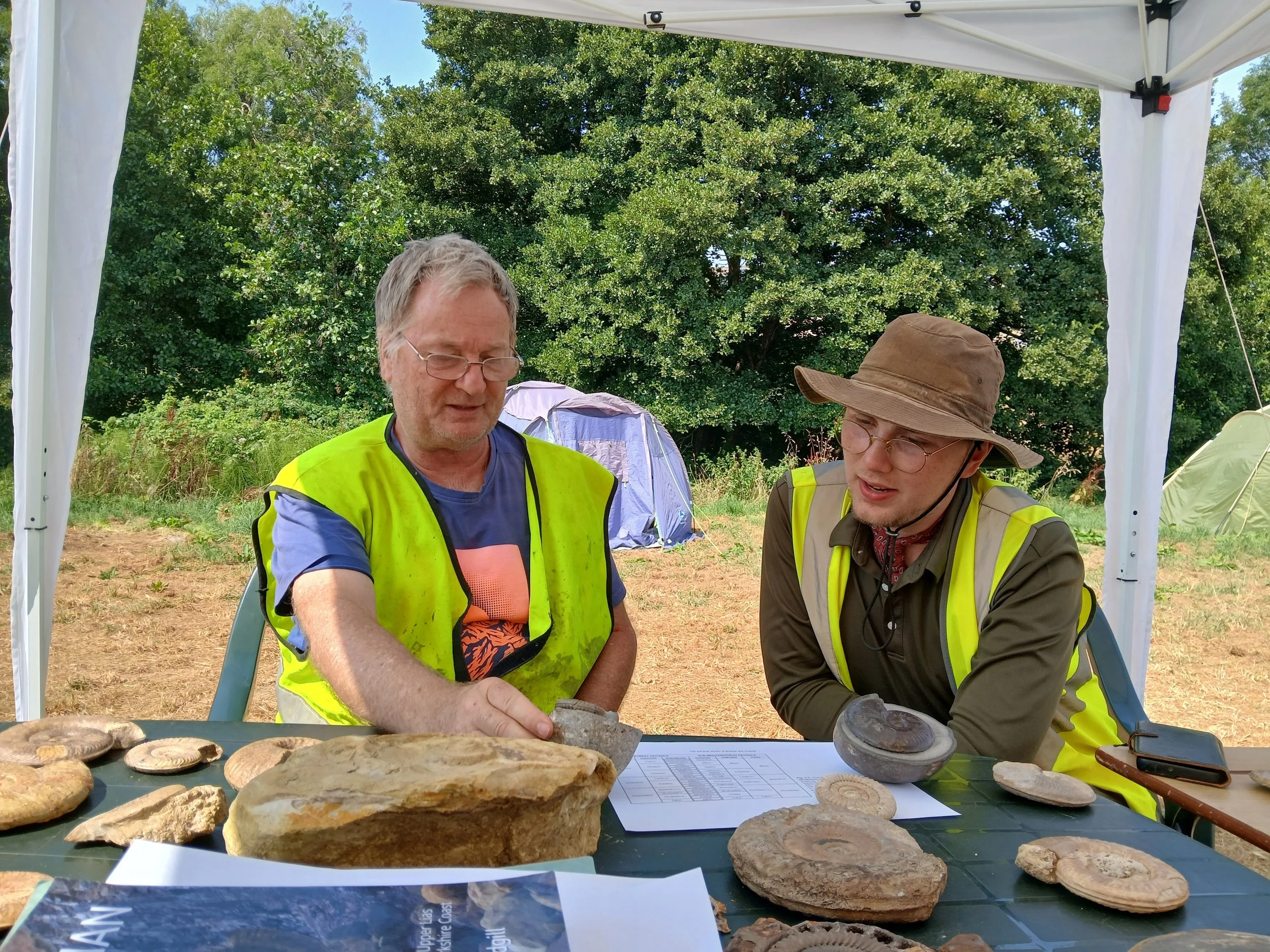
murray edmunds and finch neville examining murray’s ammonite collection
This morning I spent some time with Murray Edmunds, who had brought along a magnificent collection of ammonites relevant to this dig for the exhibition in the evening. While looking at these amazing fossils, he and I discussed the evolution of ammonites, and debated how effectively they could repel or survive encounters with predators. The largest ammonites, like Parapuzosia seppenradensis, could be two metres across and were probably difficult prey for all but the largest marine reptiles, but the much smaller examples found here appear to be more vulnerable. I am always keen to broaden my understanding of aspects of palaeontology that I am less well aquainted with, and it was fascinating to hear from a renowned authority on the subject; I came away feeling considerably more knowledgeable, and even more enthusiastic than before.
In the afternoon, many people were setting up for the public engagement event, but there was a small group still at the dig site and I gladly joined them in splitting nodules from trench five. A few excellent fish had been found earlier in the day, so I was temporarily disheartened by only finding a few scattered fish scales and fragments of bone. However, this feeling was not to last, for, in true dig fashion, something absolutely astonishing was discovered just as most of us were about to leave. Unfortunately, I am not at liberty to disclose the nature of this fossil yet, but trust me it is something fantastic.
This discovery put the whole team in good spirits, and I am pleased to say that the subsequent public engagement event was a complete success. We had nearly three hundred people come by to see the fossils collected from this site, and to learn more about how palaeontological digs are done. Supported by a demonstration of the proper nodule splitting techniques and various crafts and games, all of which looked very popular, I feel confident in my assessment of the evening's quality. I extend my sincere congratulations to the entire team for a highly enjoyable evening, and I'm sure all those who visited do the same.
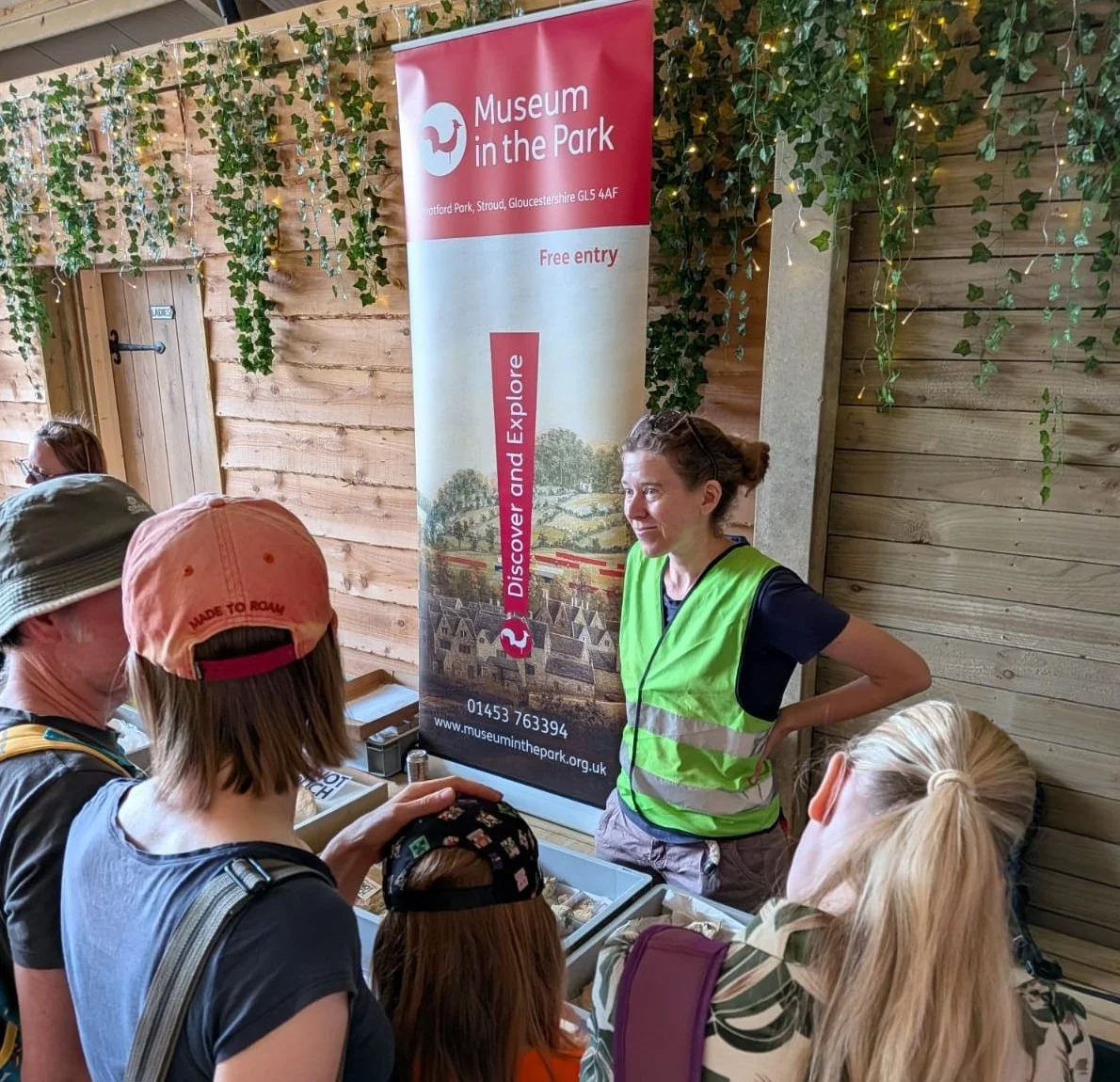
dr erin maxwell of Stuttgart’s state museum of natural history showing finds from Court farm
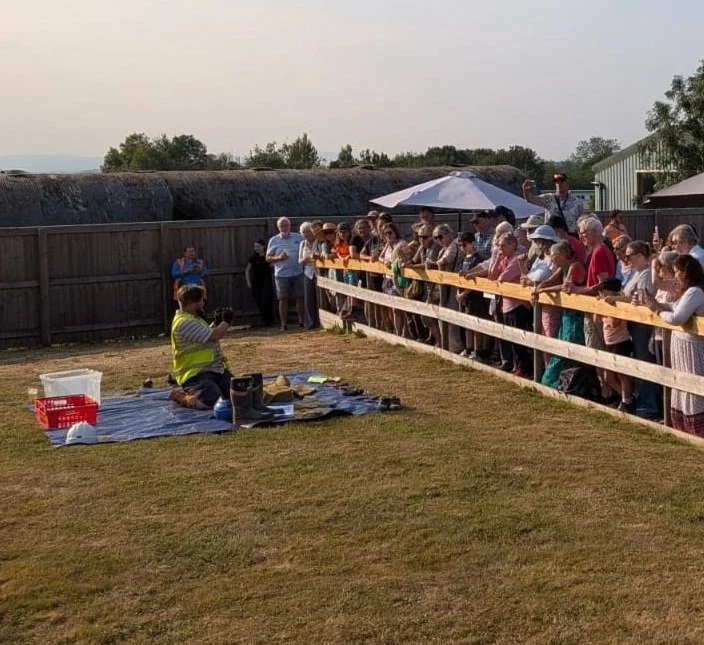
mark kemp ‘the yorkshire fossil hunter’ performing live nodule splitting for the crowd
After the public exhibition, you would be forgiven for imagining that the dig has come to an end. However, fear not! We still have the weekend to continue searching for fossils, and after today's magnificent results I am sure there are more wondrous fossils waiting to be found here at Court Farm. Until then, stay tuned...

