

2026 Day 11 - It's all about the microfossils
/By Finch Neville, Visitor Assistant and undergraduate palaeontologist
Today began, as all days on this dig, with a team photograph. A series of these photos would ideally show us in progressively muddier outfits and with progressively happier faces, as more and more fossils are steadily discovered.
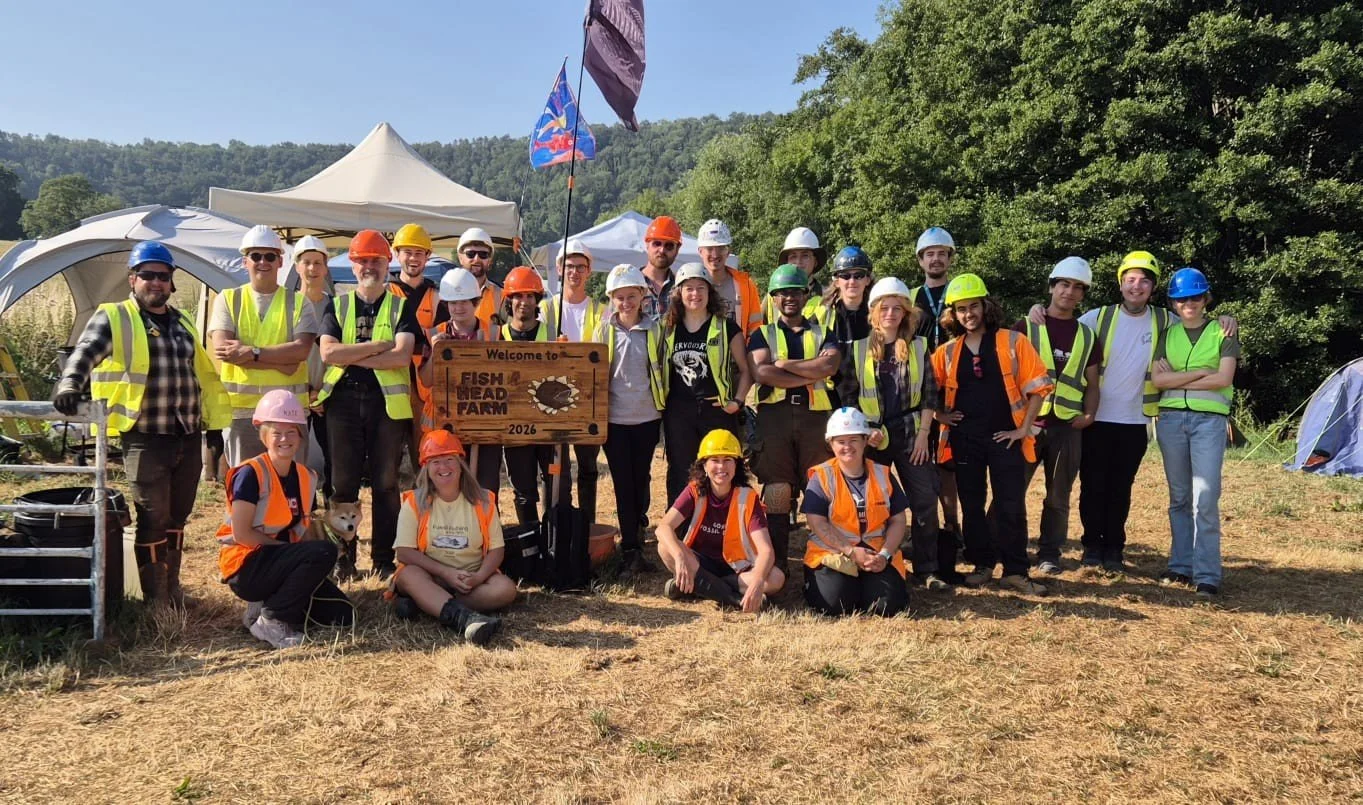
the dig team on day 11
However, today will be another shorter post, and for that I can only offer my condolences to those who miss my previously expansive turns of phrase. The cause of my current brevity is thus; before we even got to site, the excavator had constructed another test pit - a large scrape in the adjacent field now designated 'Trench Five', and the entire day was spent splitting its multitudinous nodules.
After nearly two weeks of processing nodules, one learns to discern between the good and the bad, and the aforementioned examples fell squarely into the latter category - extremely hard, they split poorly and preferred to fracture into little fragments than bifurcate cleanly along an obvious seam. The only way to prise these stubborn rocks open, I discovered, was to hit them vigorously with a hammer until a corner finally broke off, duly leaving a flat surface to make splitting easier. (Easier, of course, being a relative term.)
Not only did the nodules split extremely poorly, but they were not especially fossiliferous. This is the reality of many digs - even the most experienced palaeontologists cannot always know for sure if a fossil bed is bountiful or not.
Greater success was had by Mark Kemp and his team, who were attempting to discover microfossils by sieving through the clay. Last night, they placed a large block of clay into a bucket of water to let it soften, and today, over several hours, they processed the material through increasingly fine sieves until a small quantity of delicate grains were left over. Under a microscope, they located some fascinating specimens, including tiny brachiopods (bivalve-like invertebrates), and fragments of echinoderm (sea urchins).
After the paucity of fossiliferous nodules discovered today, these microfossils were an excellent surprise. I have every confidence that there are more of these tiny fossils to be found, it will just require a lot of patience. The dig is far from over yet, so stay tuned...

