

2026 Day 9 - Feast of fossils
/By Finch Neville, Visitor Assistant and undergraduate palaeontologist
Day nine already? Goodness me, how time flies - so many amazing discoveries are made every day that they have a habit of blurring into one. Today, to be frank, started off rather quietly, but I feel that a more relaxed morning is hardly a bad thing, and certainly not time wasted.
After our briefing, most of the team descended upon the second trench, which had been extended a few metres to offer a tantalising view of previously buried nodules. While these nodules were duly liberated from the earth to lie neatly, in situ, upon the surface, those discovered earlier in the dig were numbered and photographed.
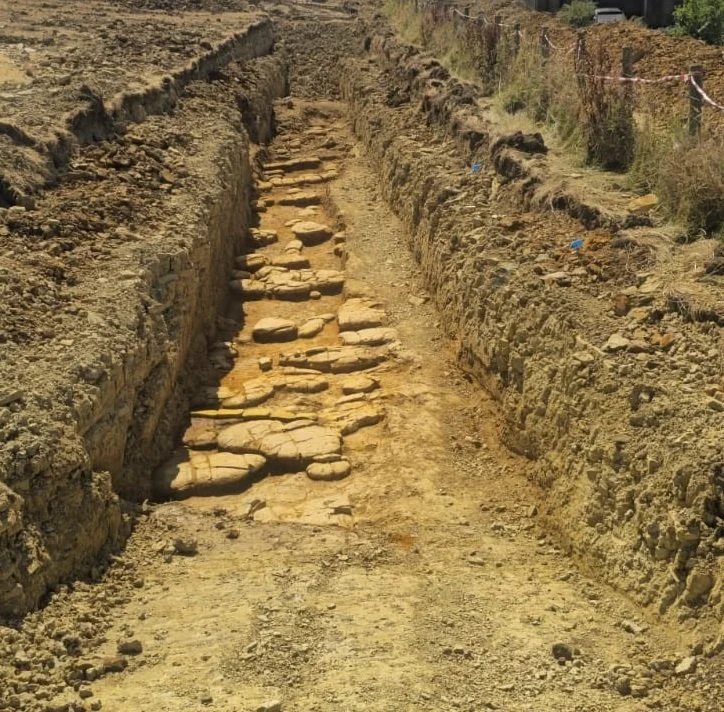
Nodules in trench 2, fully cleared.
Having enjoyed my foray into cataloguing yesterday tremendously, I spent this time working with Dr Sassoon in the barn, recording and preparing the steady stream of fossils for transport . There were some marvellous finds made, as alluded to many times over the course of this blog, which, regrettably, I am not at liberty to disclose. However, if it is your desire to learn more about this dig and its progress, I warmly extend an invitation to our exhibition evening this Friday, from 6 until 8 pm. It will be excellent, of that you may have every confidence.
By lunchtime, trench two's original nodule bed was ready for wider photographing and scanning - a drone was sent over to produce a photogrammetry record of the entire site, and the nodules were also labelled to help position any fossils within them. After lunch, the splitting began in earnest, and the cacophony of hammers against chisel and stone rang out across the valley.
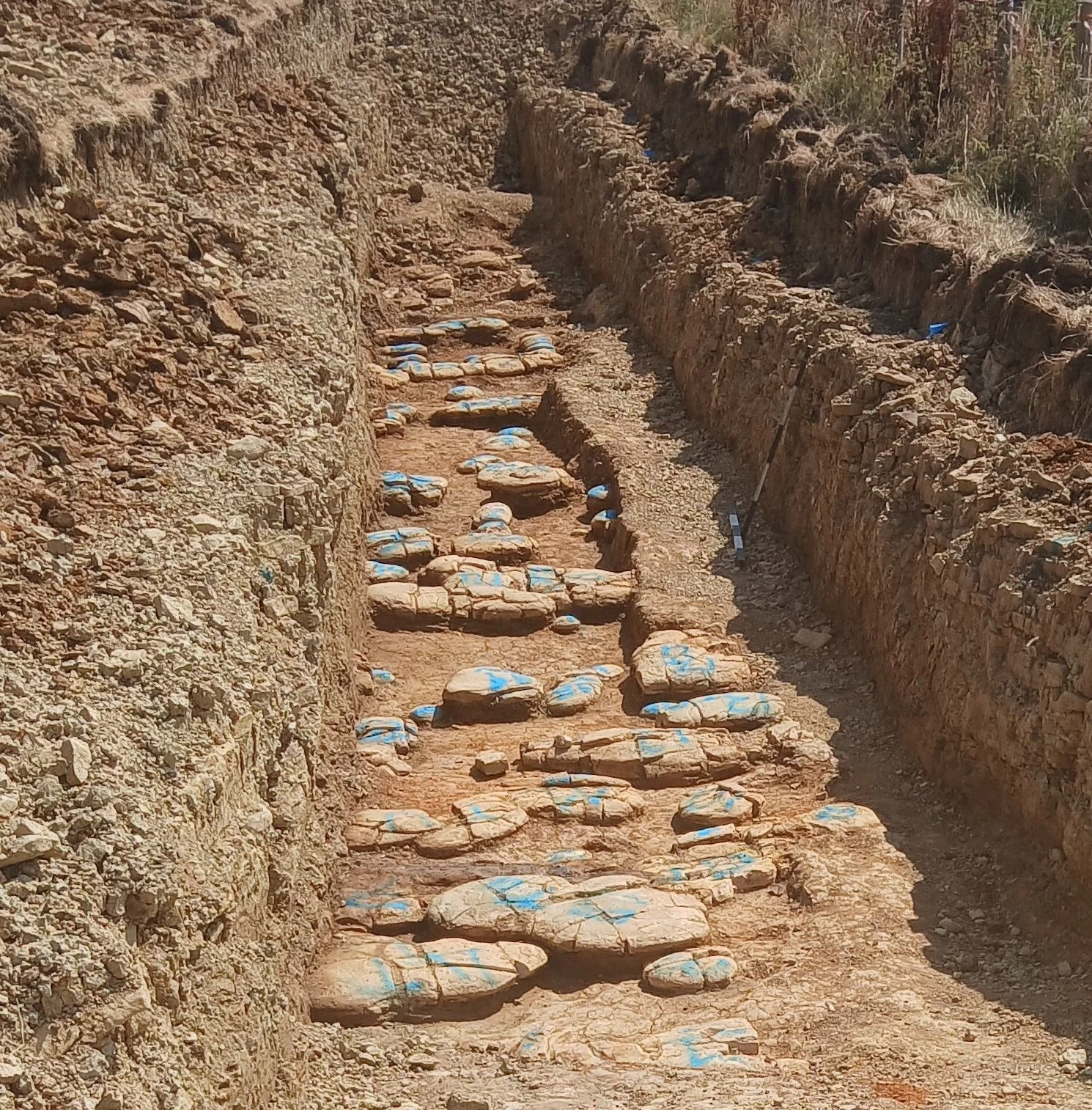
trench 2 nodules labelled and ready for lifting
Eager to take part, I carefully made my way along the trench until I found a nodule (designated '50') which had not been claimed. Partially embedded in the wall, it took some judicious swings with a mattock before I could pull it clear. Impressed upon the underside was a beautiful mould of an ammonite (they are always on the that side, interestingly), identified as a Harpoceras, which are very common here. While this was a fantastic find, it did prevent me from splitting the nodule. Instead, discoveries like this will be taken away after the dig and carefully prepared, ensuring the fossil is undamaged.
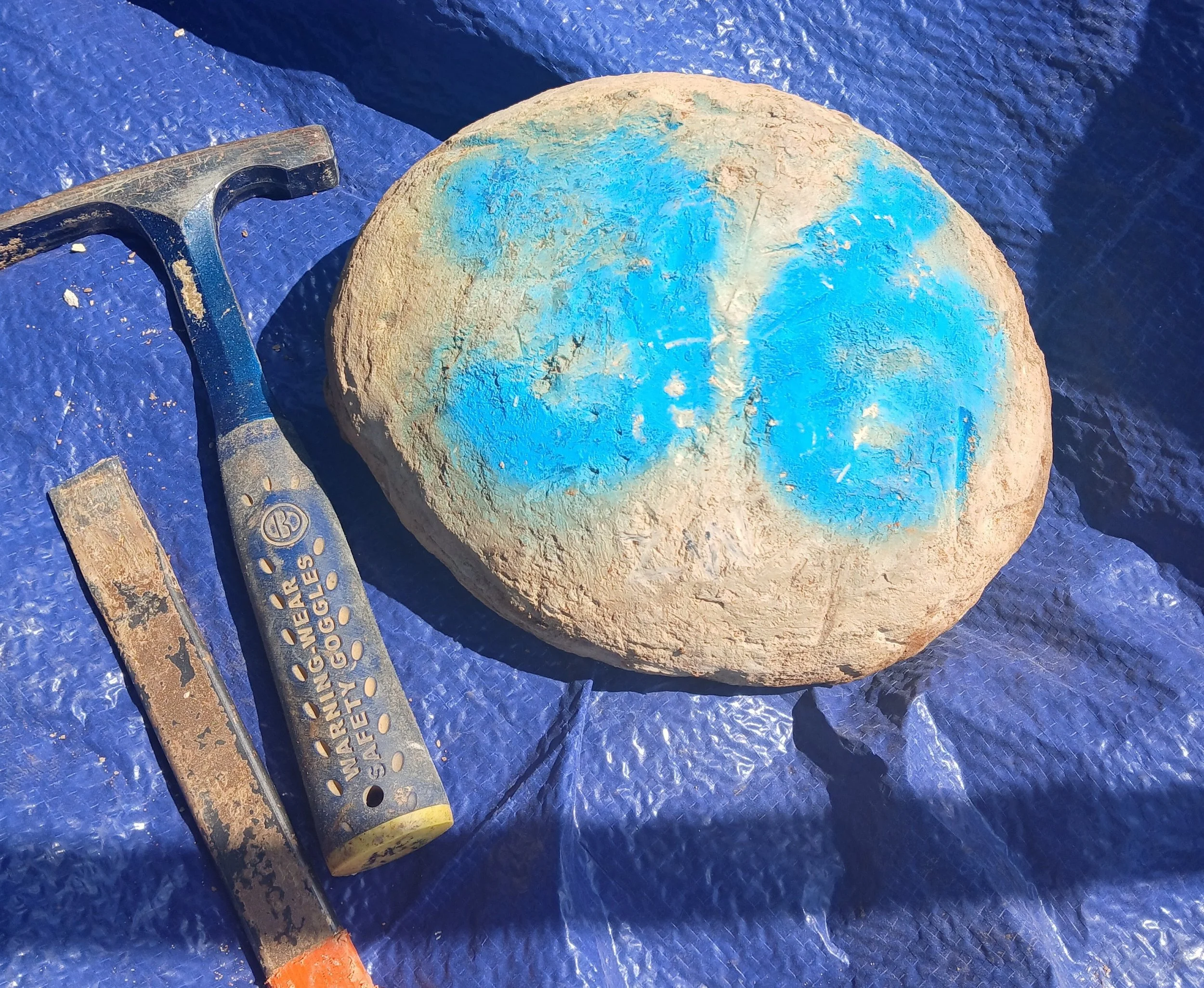
nodule 36, ready for splitting.
Fortunately, there are a great many nodules still to split, so much so that some members of the team even returned to the site in the glow of the after-dinner sun. I have yet to hear what they found, but I am optimistic that the coming days will reveal some fantastic fossils. Until then, as ever, stay tuned...

