

2026 Day 8 - Crash course in cataloguing and a dung beetle digression
/By Finch Neville, Visitor Assistant and undergraduate palaeontologist
The temperature today was, at last, one that could rationally be considered as typical for this particular time of year. This development was greeted with enthusiasm from many, although my hay-fever did not appreciate the change in pressure.
We had our morning briefing in the Rest over tea and a light breakfast, which was most agreeable. The plan for the day was to continue work in both trenches, with particular attention being drawn to the bounty of high quality nodules still being discovered in the original trench. I must inform you, gentle reader, that I have been an infrequent visitor to trench two of late, but that my veracity of statement when illustrating the estimable quality of the excavations being undertaken there can be relied upon entirely.
It will therefore come as no surprise when I disclose that I have spent most of my time in the first trench. Aided by the excavator, a terrific number of nodules are being uncovered - almost more than can be split. Excellent finds continue to be made, with Aman, Tyler and Joe bringing in a particularly large number of fossils. I myself made one or two small discoveries that were of sufficient note to merit cataloguing.
After our usual long lunch, I returned to the site, but soon was employed in recording finds with Dr Judyth Sassoon. This is not an area I can profess considerable familiarity with, but I soon got the hang of it. After being deemed worthy of cataloguing, a fossil is brought down to our records table, situated in the corner of a nearby barn. My job was to label and photograph the finds alongside a scale bar, before carefully placing them in bags for storage. As much of the dig site is comprised of fairly damp clay, the bags are left open to allow moisture to naturally escape. While I photographed, Dr Sassoon noted down the details of the fossil; from whence it came, its identity, and its collector. Once this was complete, the bags (or bags, if the fossil was in multiple parts) were carefully placed in a crate, ready for transportation back to the store room here on site, and eventually to the storage facilities of the Museum in the Park.
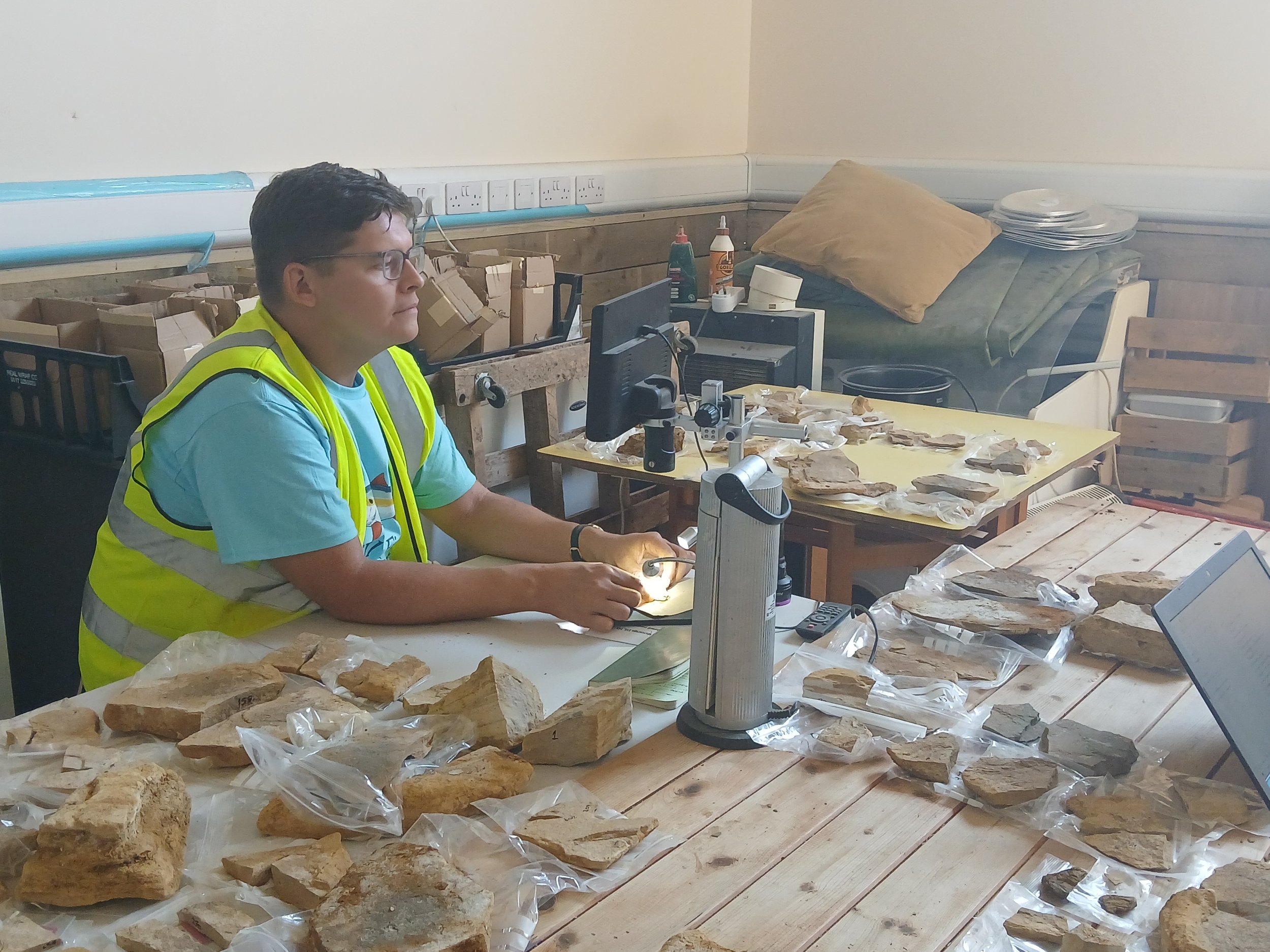
Dr Sam Cooper, toarcian fish expert from the state museum of natural history, stuttgart, examines finds under the microscope.
I did not expect cataloguing to be quite so tiring - the result of so many exemplar finds over the afternoon - and the barbeque in the evening was welcome indeed. Once we were satiated, Sally-Ann Spence, a presenter and etymologist, took us into a nearby field for a fascinating talk on dung beetles and their threatened future. A very important topic that should receive far more attention.
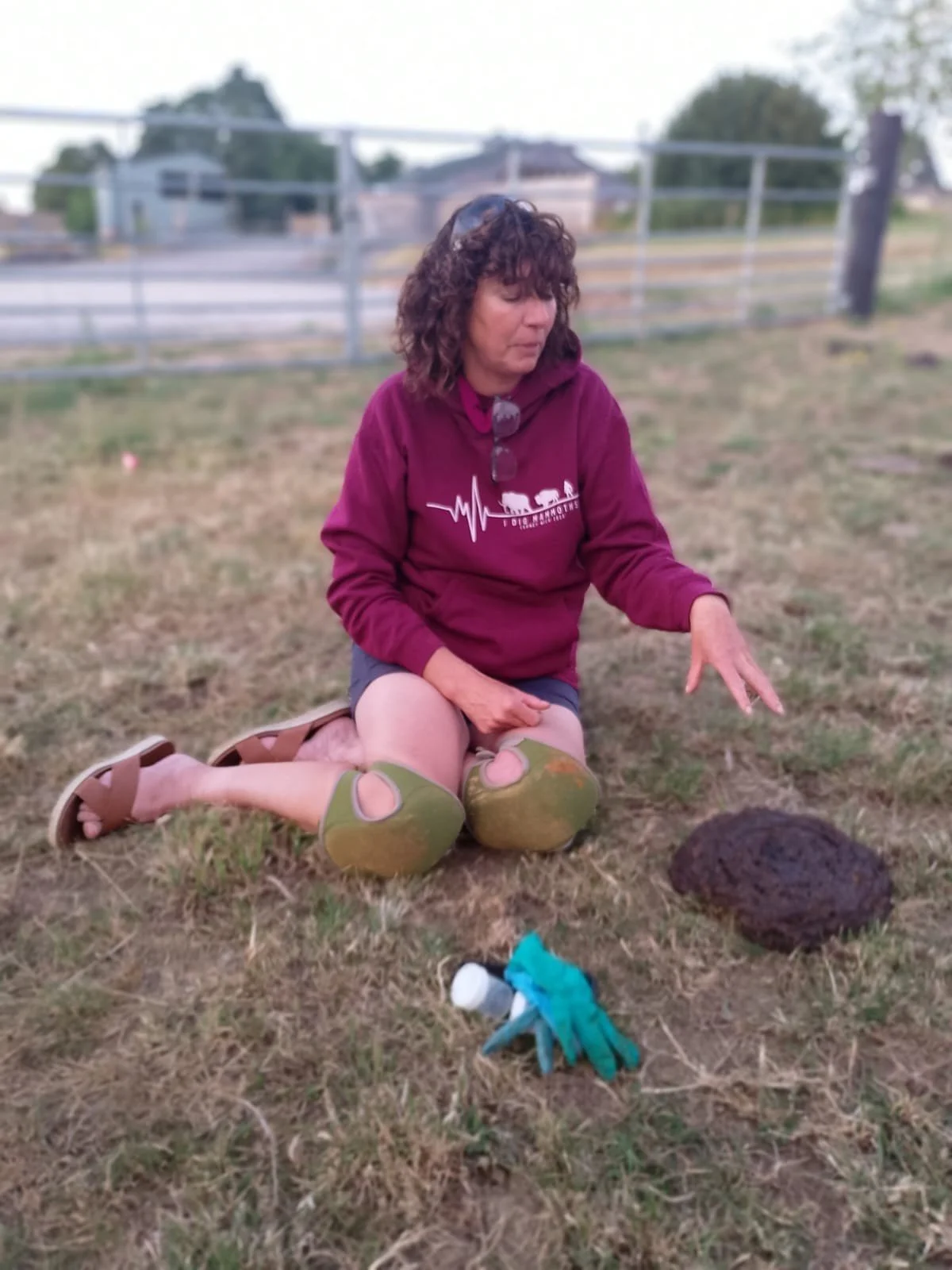
sally-ann spence talking to the team about the importance of animal dung.
Overall, this was an excellent day. The dig is already over halfway through, but the quality of finds remains exceptional; whatever will be discovered before the week is out? Keep an eye on this page to find out, and stay tuned...

