

2026 Day 5 - Trench 2 and a surprise visit
/by Finch Neville
The hottest day of the dig so far - peaking at 34 degrees in the shade, which is far warmer than an English summer has any right to be, especially when one is occupied in the energetic art of palaeontological digging. The usual activity of pre-breakfast excavation, commencing at half six yielded a few lovely specimens that were duly recorded and stored for future preparation and analysis. This site is, without a shadow of a doubt, entirely worth waking up at half five for, even if one does become tired rather early in the evening.
The morning briefing revealed that the second dig site (the trench in the field behind the original excavation) was ready for operations to commence, with the plan being to locate the nodules just below the surface and reveal them in situ. Once the entire site has been prepared, photographs, plan drawings, and photogrammetry scans can be produced, allowing us to accurately map and visualise the fossil bed.
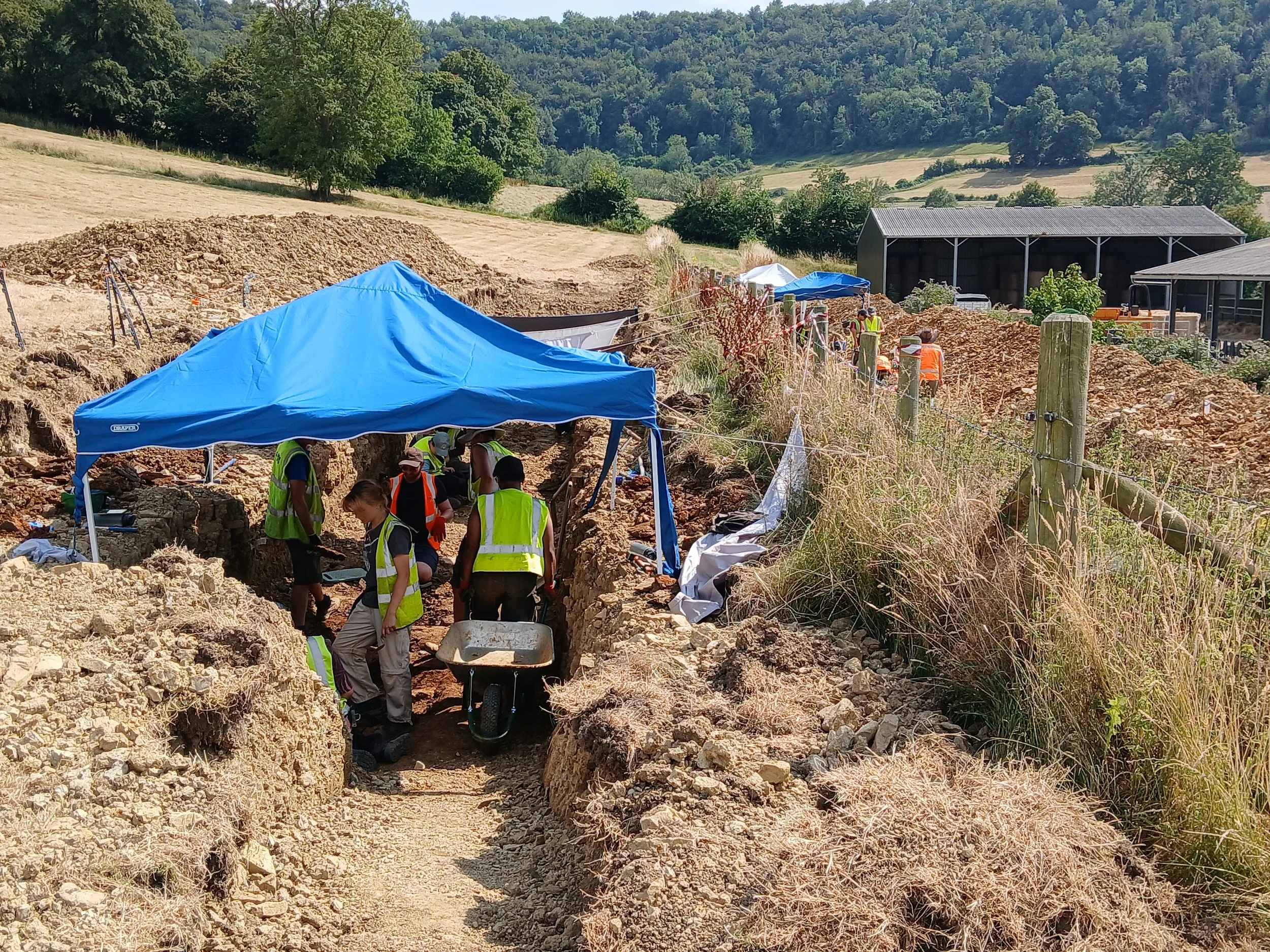
work begins on trench 2
The update regarding the new trench was met with considerable excitement, as was to be expected; preliminary observations suggest the nodules are larger and more complete than those discovered previously. Suitably galvanised into action, the team was quickly down at the site, preparing the awnings that would protect us from the sun, and shoring up the ramp that provides entry. Being as it is a site for in situ excavation, the area has been divided into sections, with four people per segment; three diggers, who remove loose material, hack away the clay, and locate the nodules, and a supervisor who ensures the site is neat and tidy, as well as being in charge of spoil removal.
I spent most of the morning on the original site, helping to locate the last of the nodules, but after lunch I made my presence known at the new trench, refreshed by food and cold water, as well as curious as to the progress made so far. Without wishing to be described as senationalist - I am not known for excessive exaggeration - you can earnestly trust my word when I say the area looked superb; a section was already being cleared at a sterling rate, with the nodules being revealed expertly; neat borders separated them from the surrounding clay.
Tyler, an experienced fossil collecter from South Dorset, had discovered a large segment of excellently preserved fossil wood which extended between the nodules. Fossilised wood is extremely fragile and can crack if it dries too quickly. Fortunately, Alison - a skilled fossil preparator - was on hand to moisten the specimen with sponges, prolonging the drying process and reducing the chance of damage. Fossil wood is normally very thin in cross section due to being compressed by sediment, so a series of photographs were taken to ensure it would remain a valuable source of information even if it were unavailable for physical research. As mentioned earlier, all nodules and fossils located are being left in situ to help us better understand the environment.
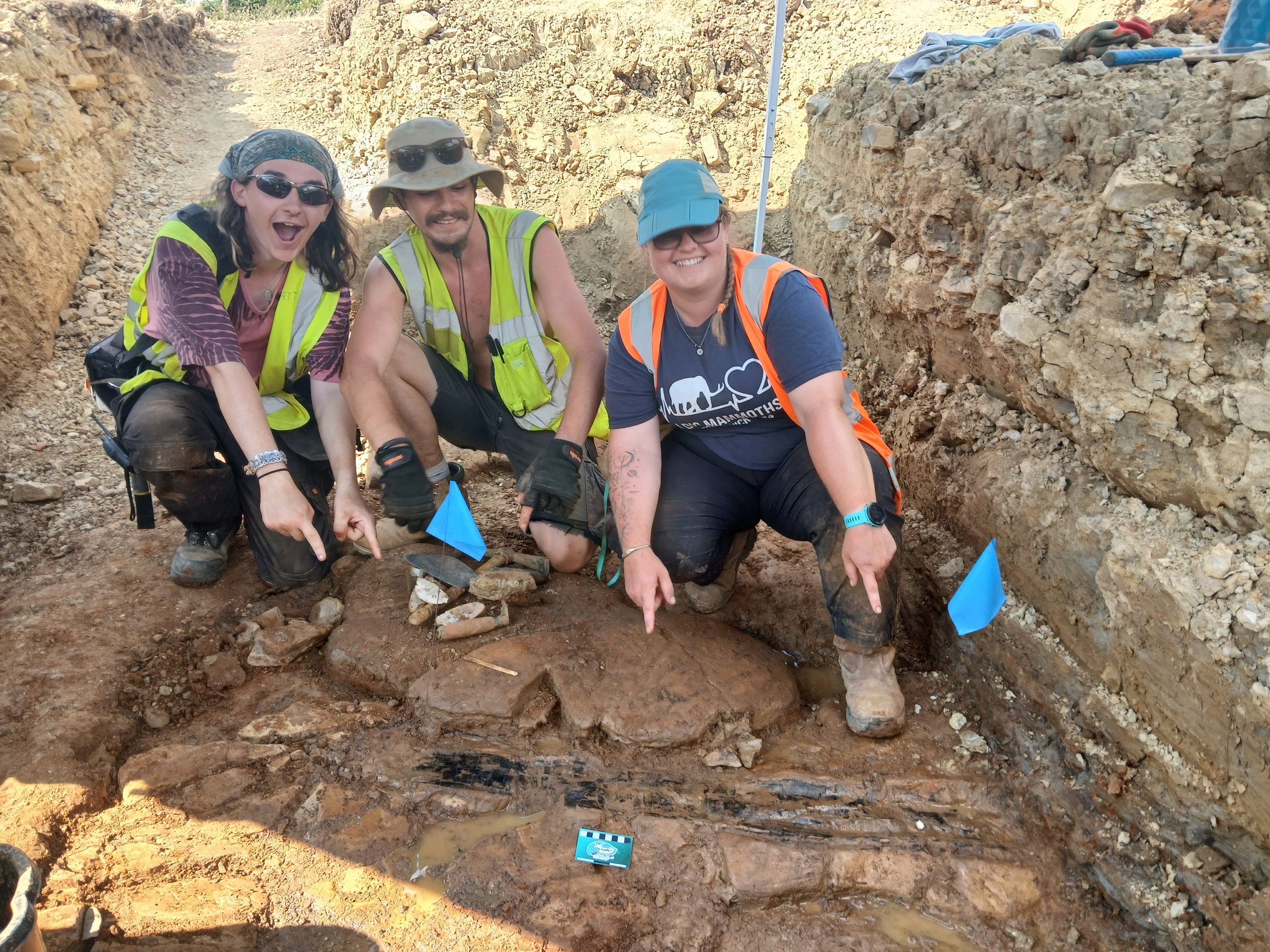
Matt, tyler and alison with the fossilised tree they’ve uncovered
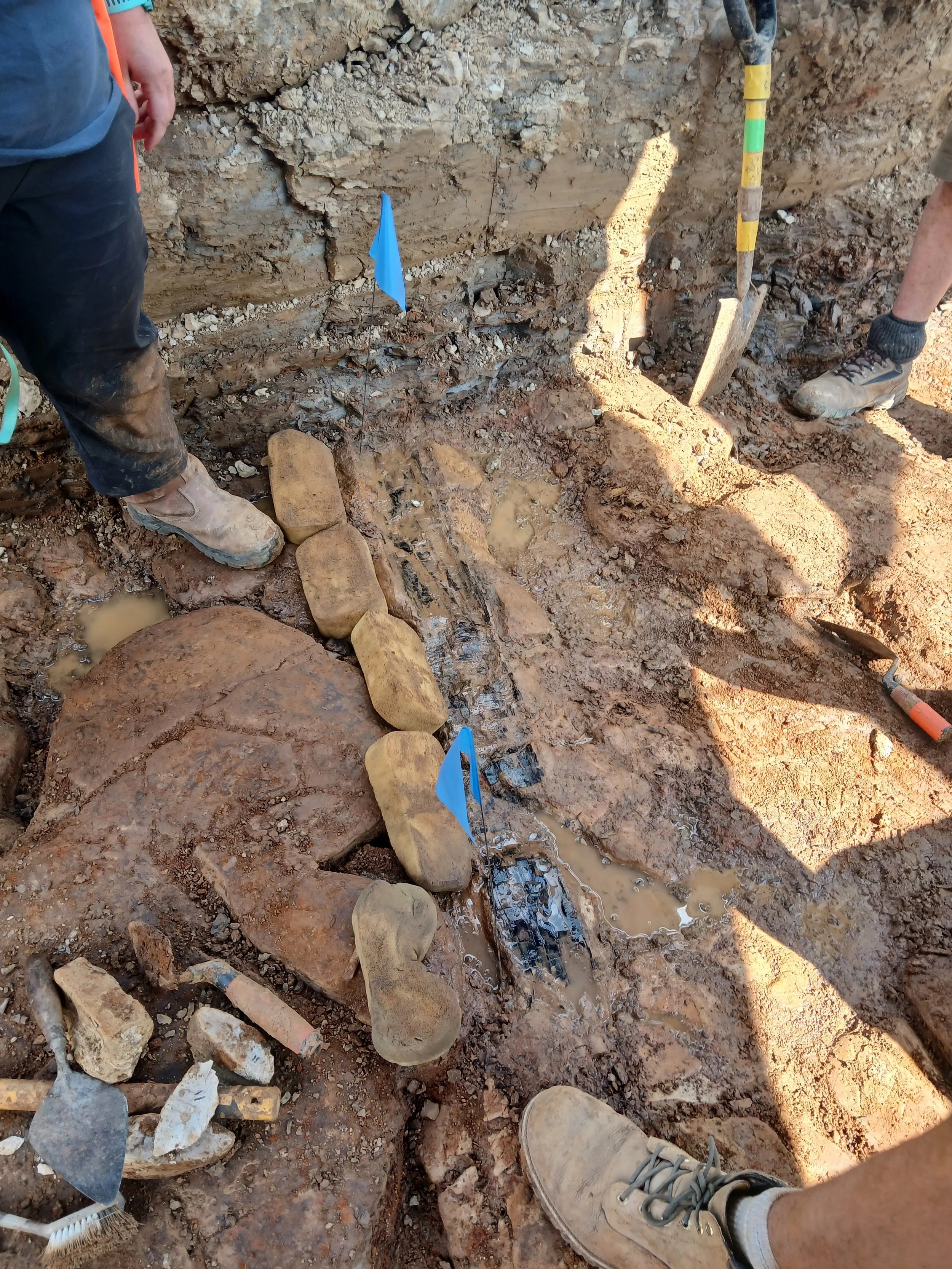
sponging down the tree to prevent it drying out
Just before digging finished for the day, the site welcomed two highly distinguished visitors. Jakob Vinther, a Danish palaeontologist garnering international renown in the fields of palaeocolour and exceptional specimen preservation, came to look at the fossils already collected and was impressed by their quality. Also attending the dig was surprise visitor Alice Roberts, the anatomist, anthropologist and broadcaster, who was similarly enthused by the progress made so far.
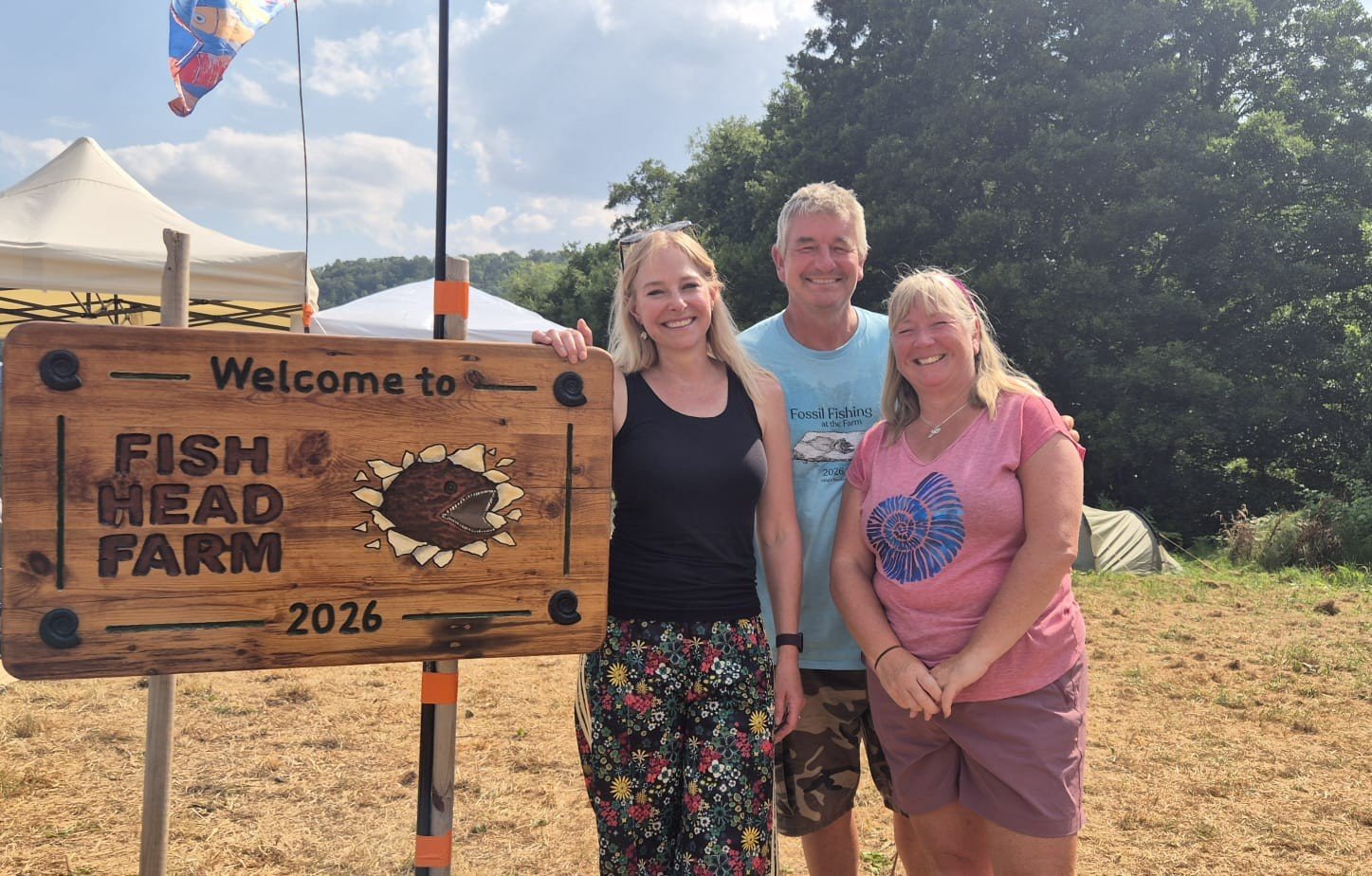
alice roberts with nev and sally holingworth on day 5 of the dig
Thus ended another successful day of digging. The nodules in the new trench, I can happily confirm, are certainly larger than those found previously. While they won't be opened for a few days, there is a lot of other fantastically exciting work going on here at Court Farm. Stay tuned...

